

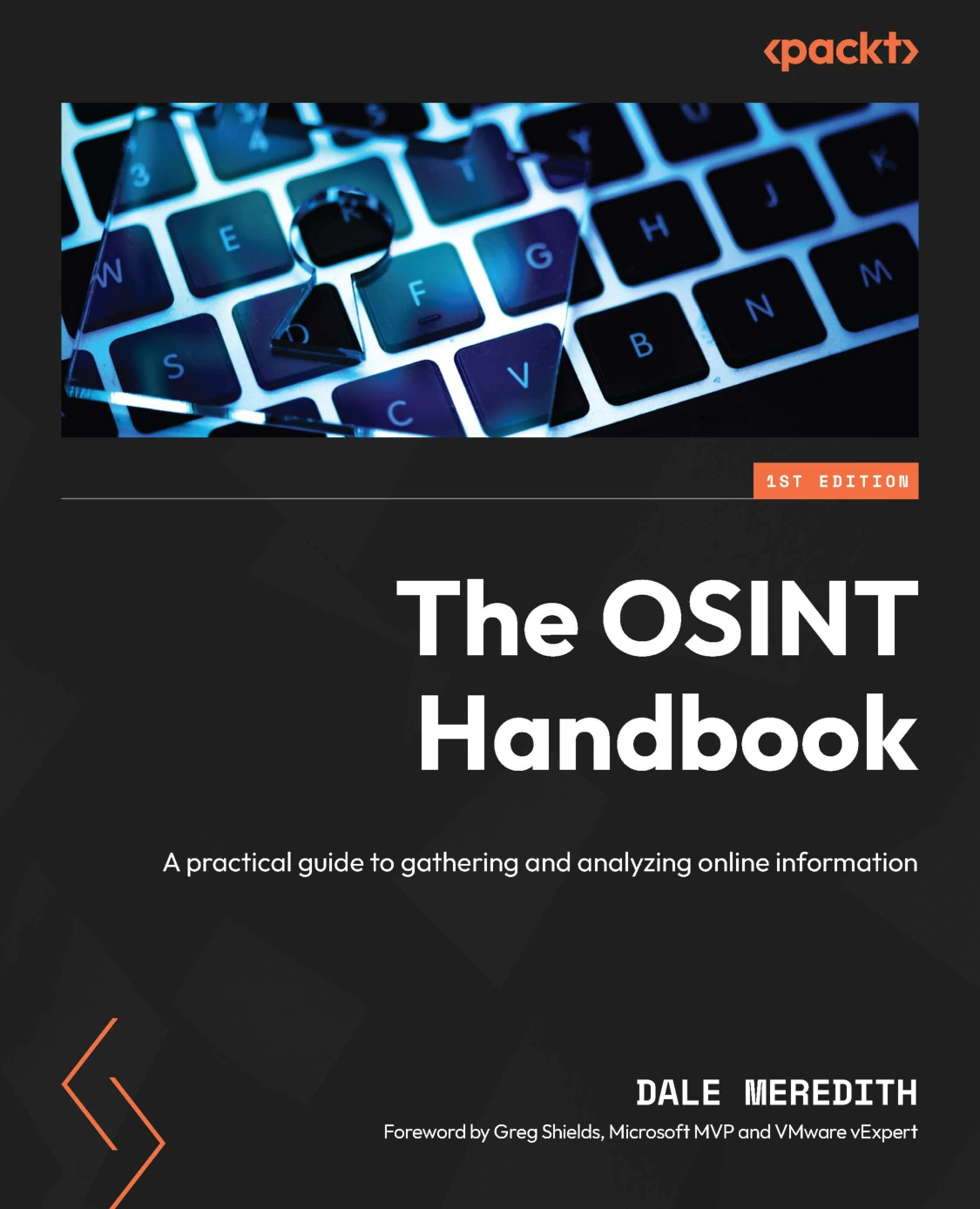
The OSINT Handbook: A Practical Guide to Gathering and Analyzing Online Information
Original price was: $5.00.$2.50Current price is: $2.50.

Dale Meredith
Product Specs:
- File Type: PDF
- File Size: 26.4 MB
- Book Language: English
- Total Page Count: 198
- Instant Download
What Makes The OSINT Handbook a Practical Guide
Dale Meredith brings years of cybersecurity teaching and real-world experience to this handbook, and it shows. Rather than simply defining open source intelligence, the book walks readers through the actual workflow of OSINT investigations—from forming the right question to selecting a method, gathering information, and turning it into useful intelligence. The tone is direct and technical enough for serious practitioners, but the explanations remain clear for readers who are still building their OSINT foundation.
Core Concepts and Anonymity First
The opening chapters establish what OSINT is, why it matters, and how it fits into the modern security landscape. Meredith then takes a step back and addresses a topic many books rush past: staying anonymous and protecting your own digital footprint while conducting research. Covering browser choices, privacy concerns, personal data exposure, and sock puppet creation, this section gives readers the operational awareness they need before they ever run a search.
Methods, Search Engines, and Hidden Sources
From advanced search operators and Google hacking to specialized academic, patent, code, and image search engines, the book shows how to dig far beyond the first page of results. Social media intelligence (SOCMINT) receives focused attention, as do the deep web and dark web. Meredith explains the structure of the internet itself—helping readers understand where information lives and how to reach it safely.
Discovery Tools and Infrastructure Analysis
WHOIS lookups, DNS and IP analysis, traceroute, and website reconnaissance are explained with clear practical use cases. The book also covers document and metadata analysis, demonstrating how hidden clues can be extracted from files many investigators overlook. Visualizing OSINT data is presented as a way to spot patterns and relationships that might otherwise remain scattered across spreadsheets and notes.
Tool-Focused Walkthroughs
- Recon-ng for modular data gathering
- Maltego for link analysis and visualization
- Shodan for discovering internet-connected devices
- Trace Labs for OSINT-focused practice
- The Aircrack-ng suite for wireless network assessment
- SpiderFoot and Twint for automation and social media collection
These aren’t just tool lists—Meredith explains when and why you would use each one, which is often the missing piece when learning OSINT on your own.
Connecting OSINT to Threat Intelligence
The handbook closes by placing OSINT in the broader context of threat intelligence and cyber risk mitigation. Phishing, malicious infrastructure, and attacker tactics are examined through the lens of publicly available information. This final section helps readers transition from collecting data to making security-relevant decisions based on that data.
Who Should Read This Book
Security analysts, SOC teams, penetration testers, investigators, researchers, and students will all find value here. If you have some familiarity with cybersecurity concepts but want a more organized, practical approach to OSINT, this handbook offers a focused and current starting point. The format works well as both a cover-to-cover read and a reference to return to when a specific technique or tool is needed.
User Reviews
Only logged in customers who have purchased this product may leave a review.
Original price was: $5.00.$2.50Current price is: $2.50.



There are no reviews yet.