

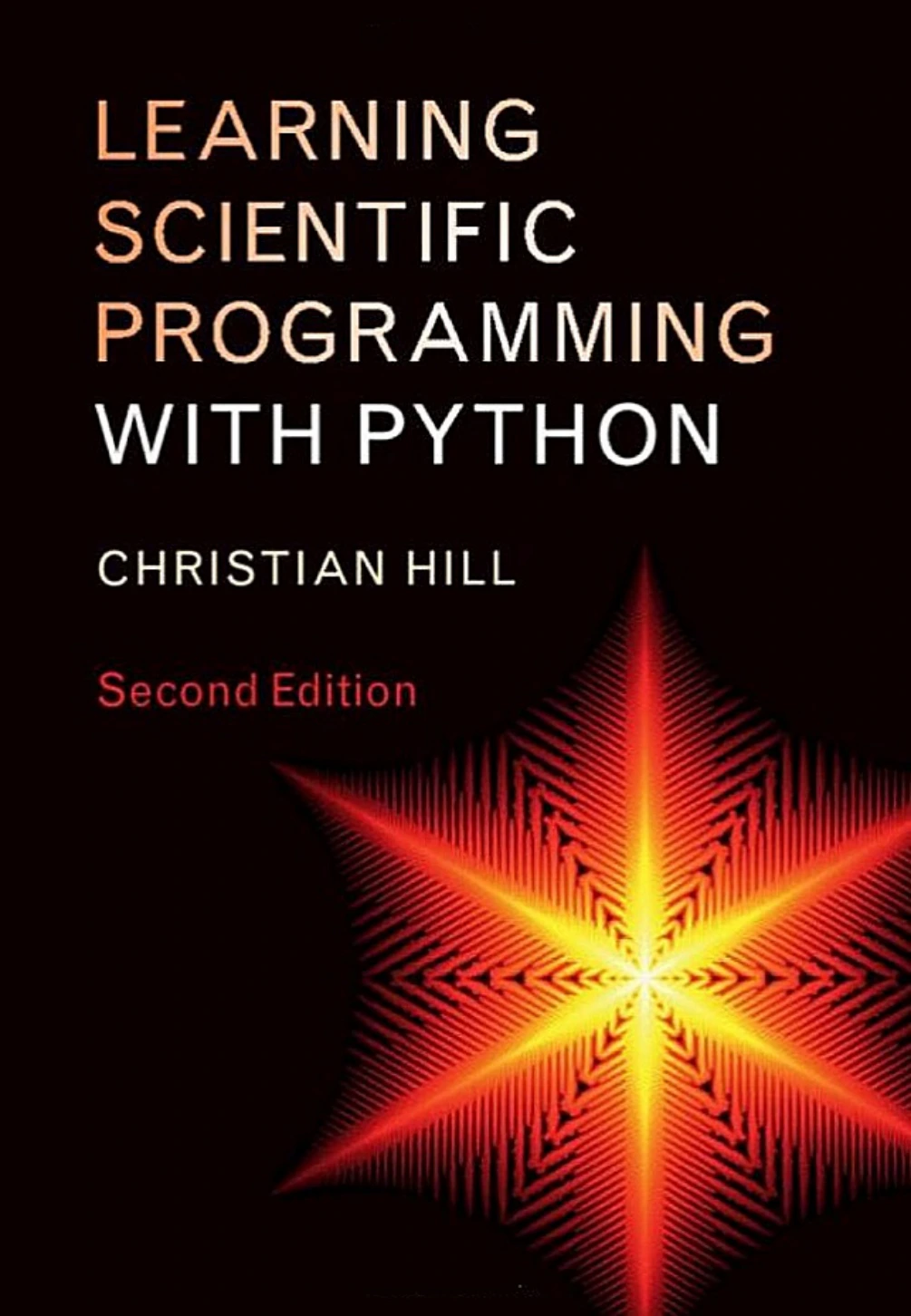
Learning Scientific Programming with Python
Original price was: $5.00.$2.50Current price is: $2.50.

Christian Hill
Product Specs:
- File Type: PDF
- File Size: 9.7 MB
- Book Language: English
- Total Page Count: 571
- Instant Download
Scientific programming asks more of code than simply getting an answer: it also asks how to work with data, visualize results, and judge whether a calculation is numerically reliable. Learning Scientific Programming with Python takes readers through that terrain step by step, beginning with the language itself and building toward the tools used in scientific computing and analysis.
Christian Hill’s second edition combines core Python instruction with examples from science and engineering. Along the way, readers encounter interactive programming, numerical libraries, plotting, data analysis, and the practical limits of floating-point calculations.
Start with Python, then put it to work
The opening chapters establish essential programming ideas: variables and data types, loops, control flow, functions, file input and output, modules, exceptions, and object-oriented programming. Short programs and applied examples make the material relevant to scientific tasks rather than treating the language as an abstract set of rules.
Explore the scientific Python toolkit
Later chapters introduce NumPy for array-based computation, Matplotlib for charts and visualizations, and SciPy for areas such as integration, interpolation, optimization, and solving equations. The book also covers IPython and Jupyter Notebooks, connecting interactive coding with shareable documents for scientific analysis.
Work with data—and think about numerical reliability
This edition adds a chapter on pandas, covering Series and DataFrames, data cleaning and exploration, and grouping and aggregation. Its final chapter turns to floating-point arithmetic, stability, conditioning, and software development practices: important considerations when a computed result needs to be more than plausible-looking.
A structured text for study and reference
With examples, exercises, solutions, a glossary, and appendices, the book supports readers as they progress from Python fundamentals to scientific programming workflows. It is aimed especially at students and researchers seeking a solid programming foundation for working with scientific data and computations.
For readers ready to connect Python fundamentals with the everyday tools of scientific computing, this volume offers a carefully staged place to begin.
User Reviews
Be the first to review “Learning Scientific Programming with Python”
You must be logged in to post a review.
Original price was: $5.00.$2.50Current price is: $2.50.
There are no reviews yet.