

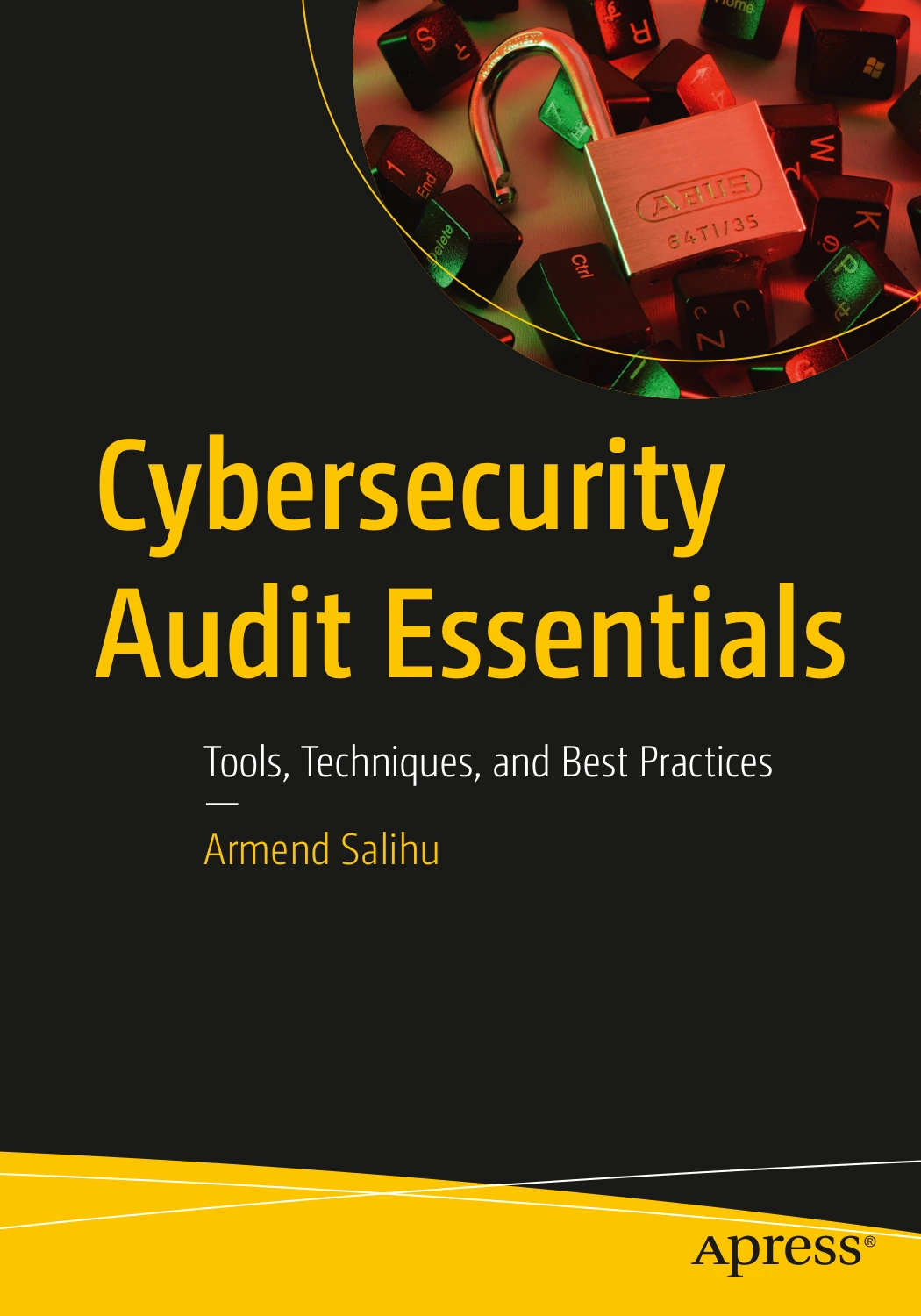
Cybersecurity Audit Essentials: Tools, Techniques, and Best Practices
Original price was: $16.05.$8.03Current price is: $8.03.

Armend Salihu
Product Specs:
- File Type: PDF
- File Size: 22.8 MB
- Book Language: English
- Total Page Count: 816
- Instant Download
A cybersecurity audit is more than a checklist: it is a structured way to understand risk, test safeguards, and turn findings into action. Armend Salihu’s Cybersecurity Audit Essentials follows that work from the first planning decisions through assessment, reporting, and follow-up, connecting audit methods with the security and business context they are meant to serve.
For IT auditors and cybersecurity practitioners, the book offers a broad, organized view of the audit lifecycle, with attention to risk-based work, compliance, security controls, and the tools used to gather and evaluate evidence.
Build an audit on clear priorities
The opening chapters introduce cybersecurity audits, their different forms, and the risks they aim to address. Internal and external audits, risk-based approaches, compliance frameworks, and the distinction between an audit and penetration testing all receive attention. This context helps readers see how audit scope and method should fit the questions an organization needs answered.
Plan with the organization in view
Planning coverage includes defining scope, engaging stakeholders, understanding business context, mapping data flows, developing checklists, and assessing risk. The book also considers how audit objectives can align with business goals and how success metrics can be defined—useful groundwork before fieldwork begins.
Examine controls, compliance, and risk
Further chapters address security controls, compliance and regulations, and cyber risk management. The contents name frameworks and requirements including NIST, ISO 27001, GDPR, PCI DSS, and HIPAA. Together, these topics frame audit work as both a technical evaluation and an assessment of how security practices respond to organizational risk and obligations.
Make tools serve the audit
Coverage of network and cybersecurity audit tools includes vulnerability scanners, SIEM systems, network monitoring, compliance management, and automated audit platforms. The emphasis is on understanding how technologies support audit activities, from identifying potential weaknesses to organizing evidence and evaluating security posture.
Turn findings into useful reporting
The later material addresses writing effective audit reports and includes real-life scenarios and case studies. For readers, this brings the process back to a central professional task: communicating findings clearly enough to inform decisions and support follow-up.
With its lifecycle-based structure and practical orientation, this cybersecurity auditing book is suited to IT auditors, cybersecurity auditors, security professionals, and IT specialists seeking a reference across planning, assessment, compliance, tools, and reporting.
User Reviews
Be the first to review “Cybersecurity Audit Essentials: Tools, Techniques, and Best Practices”
You must be logged in to post a review.
Original price was: $16.05.$8.03Current price is: $8.03.



There are no reviews yet.