

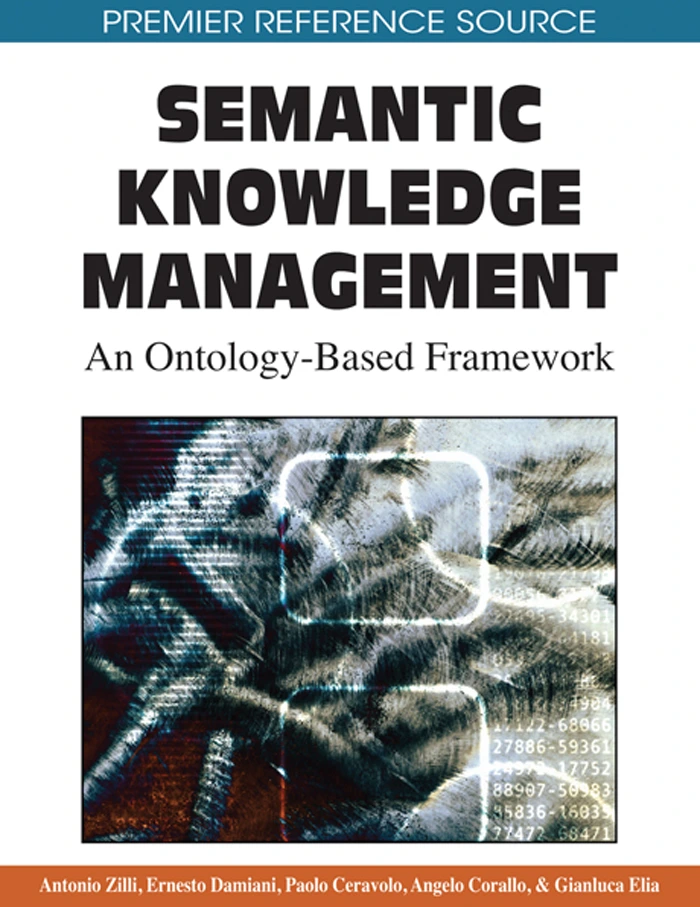
Semantic Knowledge Management: An Ontology-Based Framework
Original price was: $5.00.$2.50Current price is: $2.50.

Antonio Zilli
Product Specs:
- File Type: PDF
- File Size: 9.3 MB
- Book Language: English
- Total Page Count: 458
- Instant Download
Bridging Knowledge Management and the Semantic Web
Organizations generate vast amounts of information, but the real challenge lies in turning that data into actionable knowledge. Semantic Knowledge Management: An Ontology-Based Framework addresses this gap by showing how ontologies and semantic technologies can make knowledge more accessible, reusable, and meaningful across complex systems. Edited by Antonio Zilli and a team of leading researchers, this volume collects eighteen chapters that move from foundational concepts to real-world implementations, offering readers both the theory and the practical tools needed to build semantically aware knowledge environments.
Why Ontology-Based Approaches Matter
Traditional keyword-based search often fails to capture the meaning behind queries. Ontologies provide a formal structure that allows software agents and search engines to understand context, relationships, and intent. This book explores how that semantic layer can improve everything from internal knowledge bases to collaborative platforms. The early chapters introduce core ideas such as ontology engineering, taxonomy extraction, and semantic search performance, supplying readers with a clear technical foundation before moving into more specialized applications.
Inside the Framework
The book is organized into three sections, covering:
- Knowledge-Based Innovations for the Web Infrastructure: chapters on the KIWI framework, OntoExtractor, search engine approaches, P2P reputation systems, and e-learning platforms.
- Semantic in Organizational Knowledge Management: explorations of activity theory, virtual communities, and project memory through an ontological lens.
- Semantic-Based Applications: case studies ranging from consultancy firms and financial news analysis to multimedia representation and travel support systems.
Each chapter contributes a distinct perspective, yet together they form a cohesive picture of how semantic knowledge management can be implemented across diverse domains.
Real-World Applications
What sets this volume apart is its commitment to operational relevance. The contributors do not stop at theoretical discussion; they present concrete tools and case studies that demonstrate tangible outcomes. For example, chapters detail a workflow management system for ontology engineering, a semantic web system supporting e-learning, and an ontological approach to managing project memories in organizations. These examples show how the concepts can be applied to improve knowledge sharing, collaboration, and decision-making in real settings.
Who Will Benefit
Researchers, graduate students, and professionals in information science, knowledge management, computer science, and organizational studies will find this book a valuable addition to their libraries. The balance between foundational explanations and advanced applications makes it suitable both for those new to semantic technologies and for practitioners seeking deeper technical insights. It is a scholarly reference that rewards careful reading and offers a roadmap for bridging the gap between raw information and meaningful, machine-understandable knowledge.
User Reviews
Only logged in customers who have purchased this product may leave a review.
Original price was: $5.00.$2.50Current price is: $2.50.



There are no reviews yet.