

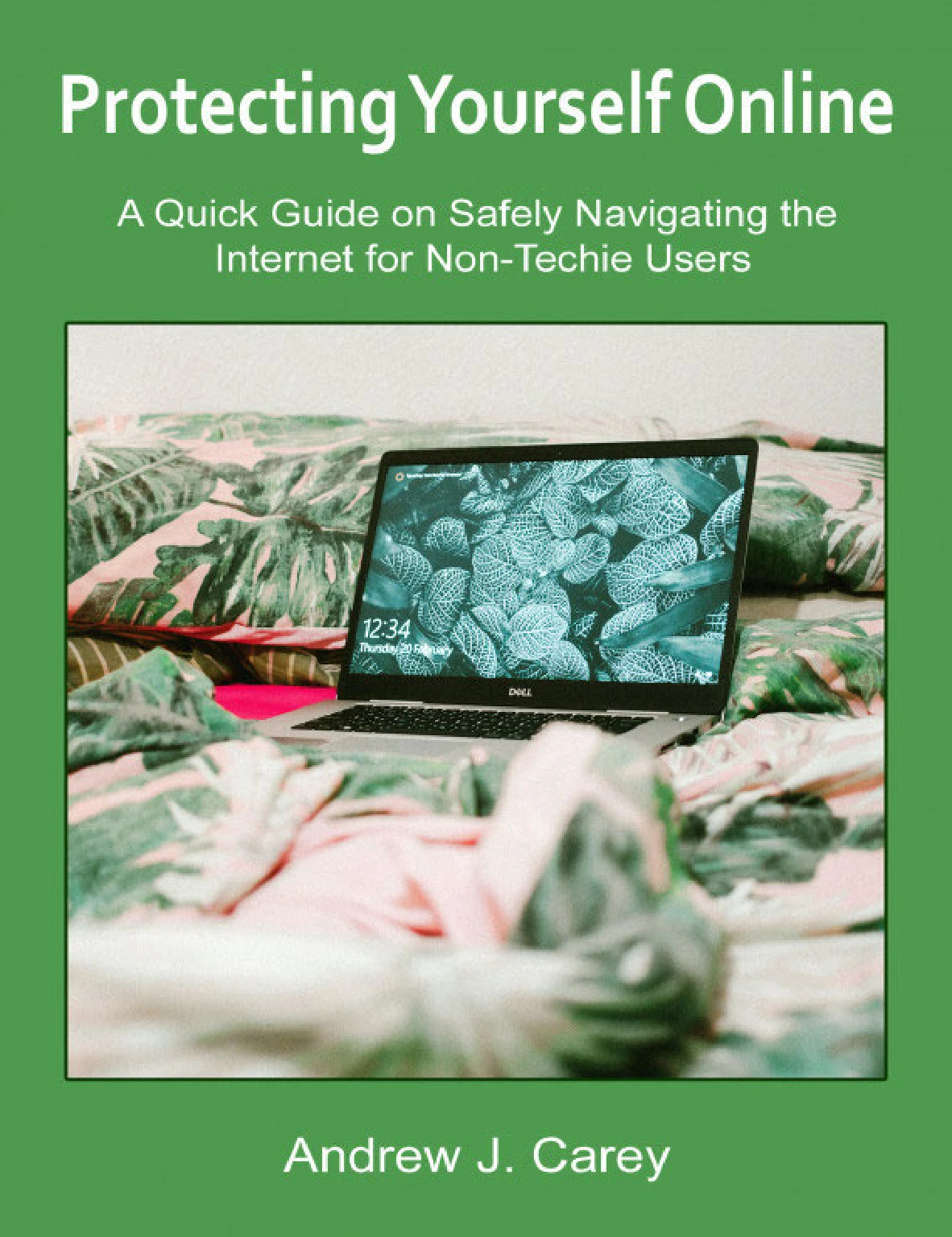
Protecting Yourself Online: A Quick Guide on Safely Navigating the Internet for Non Techie Users
Original price was: $5.00.$2.50Current price is: $2.50.

Andrew J. Carey
Product Specs:
- File Type: PDF
- File Size: 243.5 KB
- Book Language: English
- Total Page Count: 23
- Instant Download
A Calm, Practical Introduction to Online Safety 🔐
Most people do not need a cybersecurity textbook. They need clear answers to everyday questions: Is this email real? Why does this website want a code from my phone? How often should I change a password? Andrew J. Carey wrote Protecting Yourself Online for readers who feel overwhelmed by the internet but still want to use it with more confidence.
Carey is a software developer and software architect with more than 20 years in the industry, including work and training in secure programming and information security. That background informs the book, but the tone stays approachable. Technical terms appear only when they are useful, and they are explained rather than assumed.
What the Guide Covers
The book moves through the threats and habits that matter most to ordinary users. Early chapters focus on social engineering: the manipulative emails, phone calls, letters, and faxes that try to trick people into handing over information. Carey explains how phishing works, how spearphishing and pharming differ, and what to do when a message, call, or letter feels wrong.
From there, the guide turns to protective tools and routines. Readers learn about multi-factor authentication, password and passphrase best practices, lost-password retrieval, anti-malware software, firewalls, operating-system patches, and the difference between viruses and other malware. Later sections address routers and modems, browser security, digital certificates, auto-fill features, social media privacy, and simple changes that can reduce everyday risk.
Written for Non-Tech Readers
The book is aimed at less tech-savvy users and older users—people who may find the internet confusing or intimidating. It avoids jargon where possible and provides context when jargon is unavoidable. The goal is not to turn readers into IT professionals. It is to help them recognize common attacks, ask better questions about the services they use, and respond sensibly if something goes wrong.
Each major section includes action items, so the advice is easy to revisit and put into practice. A closing glossary covers terms such as authentication, bandwidth, bloatware, cookies, CAPTCHA, encryption, hashing, VPN, streaming, and the dark web.
Why It Still Matters 📵
Online scams change, but many of the underlying tactics do not. False urgency, impersonation, and requests for sensitive information remain effective because they target human trust rather than technical weaknesses. Carey’s guide treats readers with respect, noting that falling for a scam is not a sign of stupidity. The emphasis is on practical prevention, quick reporting, and recovering control after a breach.
If you want a short, readable starting point for personal cybersecurity, this guide offers a steady, non-alarmist path through the basics. It is especially useful for families, older readers, and anyone who supports less technical friends or relatives online.
Topics at a Glance
- Social engineering, phishing, phone scams, and fraudulent mail
- Multi-factor authentication and stronger password habits
- Anti-malware, firewalls, and computer maintenance
- Router, modem, and home-network security
- Browser safety, certificates, and privacy settings
- Social media risks and practical security tips
- A plain-language glossary of common internet terms
Protecting Yourself Online is a compact guide for building safer digital habits without becoming a technical expert.
User Reviews
Only logged in customers who have purchased this product may leave a review.
Original price was: $5.00.$2.50Current price is: $2.50.




There are no reviews yet.