

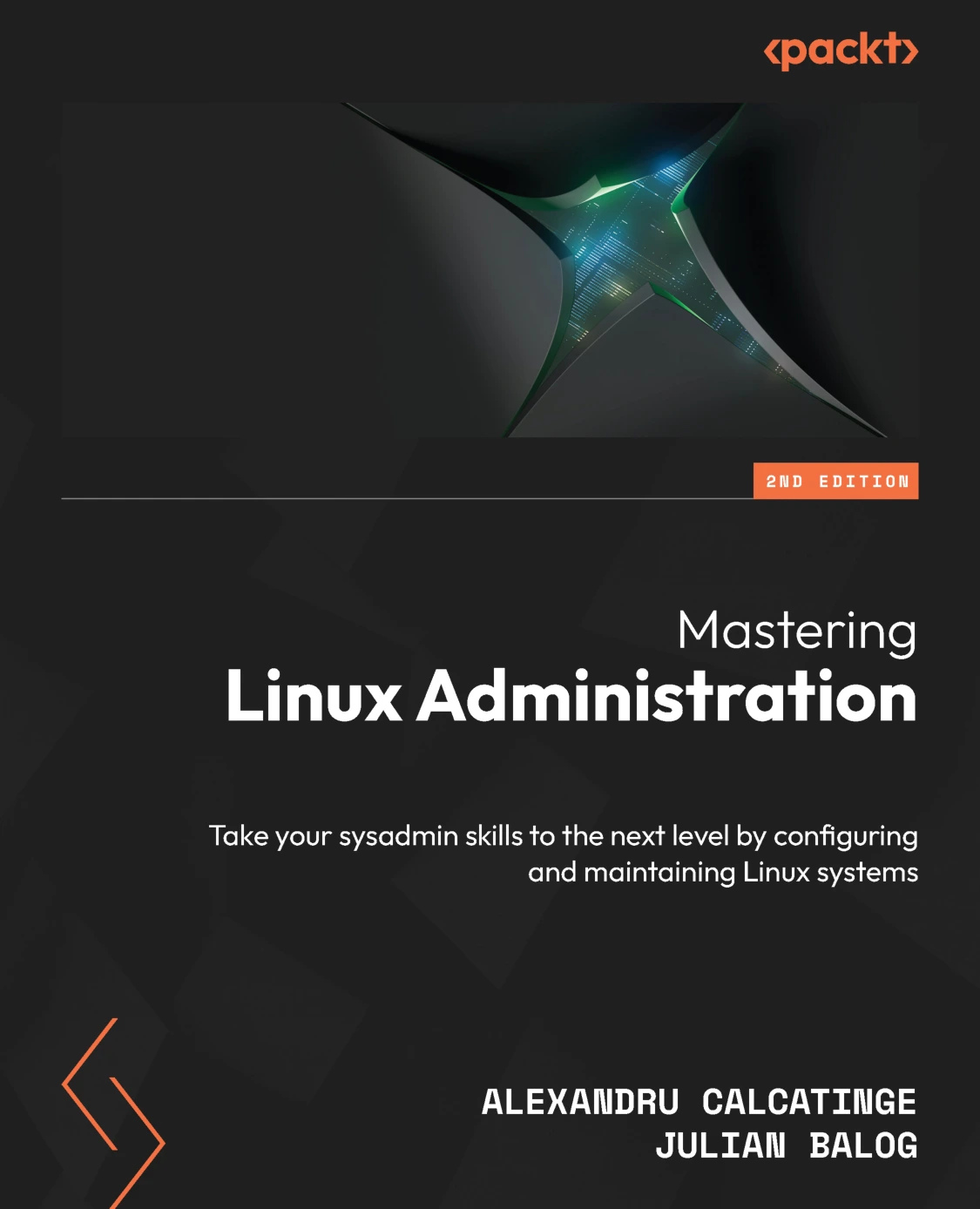
Mastering Linux Administration, Second Edition
Original price was: $5.00.$2.50Current price is: $2.50.

Alexandru Calcatinge
Product Specs:
- File Type: PDF
- File Size: 99.7 MB
- Book Language: English
- Total Page Count: 764
- Instant Download
A 2024 Update to a Practical Linux Administration Guide
Mastering Linux Administration, Second Edition, is built for the working realities of Linux systems: installs that need to be repeatable, users and permissions that need to be controlled, services that need to stay available, and networks and storage that need to be understood rather than guessed at. Alexandru Calcatinge and Julian Balog guide readers through those responsibilities in a structured sequence, from the foundations of the operating system to the advanced topics that appear as infrastructure grows.
Published by Packt in 2024, this second edition revisits the material with updated coverage and a clear progression through both basic and advanced administration. It is not a loose collection of tips; it is a path through the concepts and commands that Linux administrators return to again and again.
Start with Installation, Shell, and Filesystem Foundations 💻
The opening sections establish the ground work. Readers meet Linux distributions and the practical choices involved in installing Linux on bare metal, in virtual machines, and through Windows Subsystem for Linux. The shell chapter explains command structure, manual pages, file paths, and essential operations for viewing and editing files. From there, the book moves into software management across DEB, RPM, snap, and flatpak packages, giving a wider view of how software arrives on a Linux system.
These chapters matter because administration rarely begins with advanced troubleshooting. It begins with knowing where files live, how commands are formed, and how packages are managed without breaking the system.
Users, Groups, Permissions, and Daily Control ⚙️
User and group management receives detailed attention, including creation, modification, deletion, sudo, and file permissions. The book then turns to processes, daemons, and signals. It covers process types, process anatomy, and the tools used to inspect and control running systems, such as ps, pstree, top, kill, killall, pgrep, and pkill. Systemd daemons and inter-process communication are also introduced, connecting everyday commands to the services that keep a system running.
For administrators, this is the operational core: who can do what, which processes are running, and how to intervene safely when something needs to stop, restart, or be investigated.
Disks, Filesystems, LVM, and Linux Networking
The later chapters move into storage and connectivity. Readers encounter Linux device abstraction, filesystem types, disk and partition concepts, and LVM, including snapshots. Networking coverage includes basic networking concepts, the OSI model, the TCP/IP stack, and the practical work of connecting and troubleshooting Linux systems. Together, these sections reflect the areas that often determine whether a server remains manageable as it scales.
Who This Book Is For
This second edition is relevant to system administrators, IT professionals, developers, and technical readers who need a stronger command of Linux operations. It suits those who want a structured reference that begins with fundamentals and continues into advanced administration topics. The material assumes a technical interest and a willingness to work at the command line, but it does not require prior mastery of every concept it introduces.
Why This Edition Is Worth Adding to Your Shelf
The second edition’s value lies in its scope and sequence. It connects installation, shell work, software management, users, processes, storage, and networking into a single administration path. For readers who learn best by understanding how the pieces relate, that structure is the point. It offers a measured way to build Linux administration knowledge rather than a scattered set of shortcuts.
User Reviews
Be the first to review “Mastering Linux Administration, Second Edition”
You must be logged in to post a review.
Original price was: $5.00.$2.50Current price is: $2.50.






There are no reviews yet.